
Do Garden Rooms Add Value? ROI, Buyers & Key Factors
Quick answer: Yes — a well-built garden room can add 5–15% to your property's value, according to UK property experts. But the uplift isn't automatic. It depends heavily on build quality, specification, and how usable the space feels to future buyers. A properly insulated, year-round room will always outperform a glorified shed with fairy lights.
There's a version of this question that has a very simple answer, and a version that needs a bit more thought. The simple answer? Yes, garden rooms can add value. The longer answer — the one that's actually useful — is that it depends on how the room is built, what it's used for, and whether a future buyer would genuinely see it as an asset rather than a problem to deal with.
This guide covers all of it: the financial case, what drives the uplift, planning permission basics, the best use-cases for resale, and what to avoid if you don't want to accidentally reduce your home's appeal.
Do garden rooms add value?
Generally, yes — but "value" means two different things here, and it's worth being clear about both.
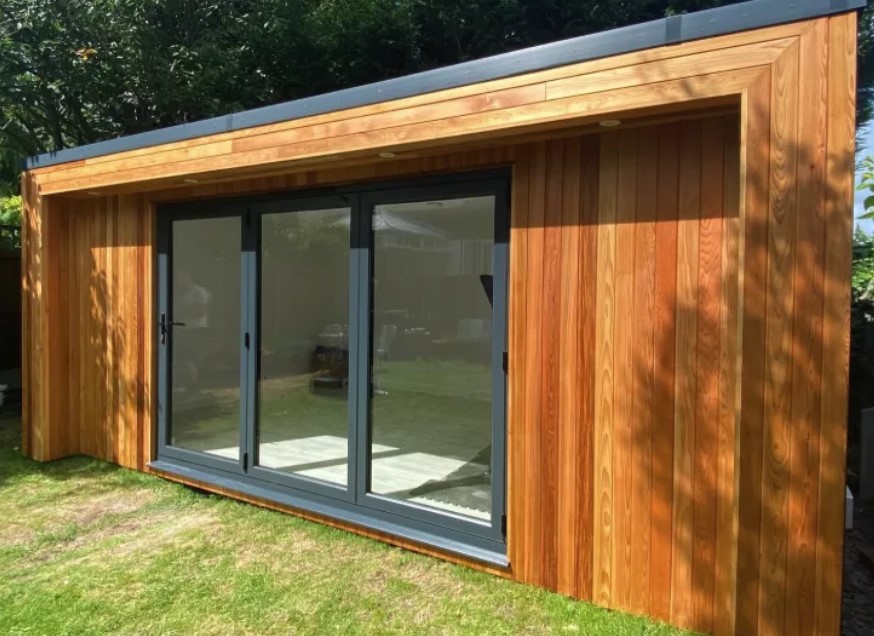
Resale value uplift is the one most people ask about. A professionally built garden room creates additional usable floor space, which is one of the most significant drivers of property value in the UK. According to property experts, a high-quality garden room can increase a home's value by anywhere between 5% and 15%, depending on location, build quality, and how functional the space is. On a £300,000 home — around the UK average — that's potentially £15,000 to £45,000 added value.
Lifestyle value is the other side of the coin, and it's underestimated. A quiet, properly insulated room at the bottom of the garden changes how a home functions day-to-day. Work calls without the washing machine in the background. A gym that doesn't require a commute. A space that's genuinely separate from the house. That practical appeal feeds directly into buyer willingness to pay — even if it doesn't show up in a Zoopla estimate.
How much value do garden rooms add?
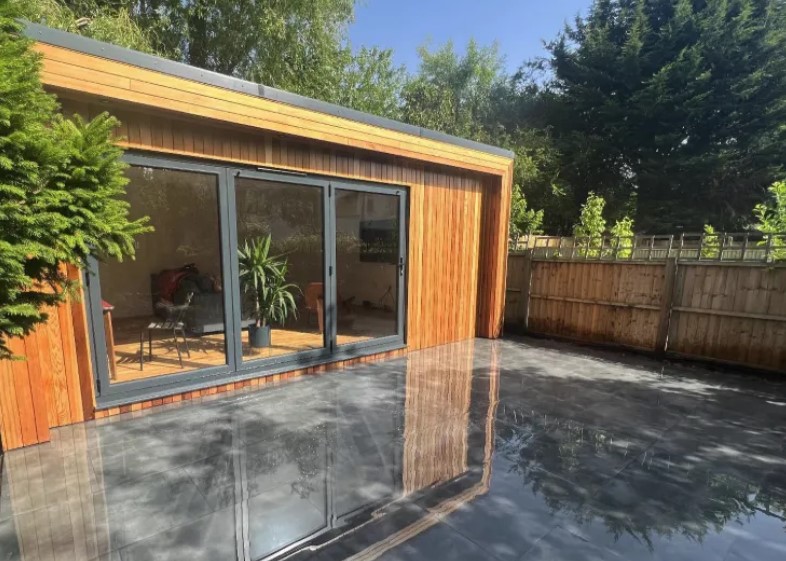
Putting a hard number on it isn't straightforward — and anyone who gives you a precise percentage without knowing your property, your area, and the spec of the room is guessing. That said, the range of 5–15% is a useful starting point.
Location plays a significant role. In Surrey and outer London, where space is at a premium and buyers are often professionals with hybrid working patterns, a well-designed garden office or multi-purpose room can be a genuine differentiator. Rightmove and Zoopla have both reported increases in searches for properties with dedicated outdoor rooms and workspaces since the pandemic — and that trend has continued into 2025 (Horto, 2025).
Size and quality matter just as much as location. A room that feels considered — solid underfoot, well-lit, properly insulated, with good electrics and clean external finishes — reads very differently to buyers than a small, cold box with a single plug socket. It's the difference between "extra living space" and "a thing we'll need to deal with."
If you're thinking seriously about resale, it's worth speaking to a local estate agent before you build. They'll have a feel for what comparable properties are achieving and whether your specific garden setup is likely to command a premium.
Are garden rooms a good investment?
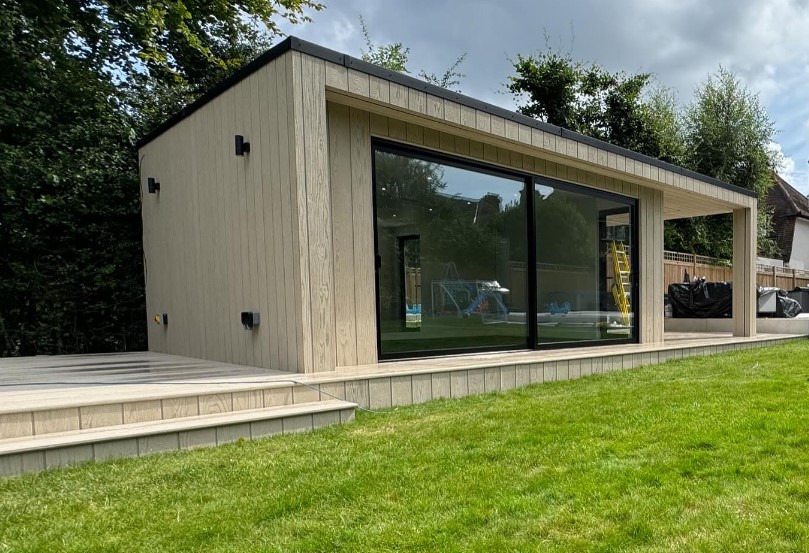
Compared to the alternatives — a full extension or a loft conversion — garden rooms often make a strong case for themselves.
Extensions and loft conversions can be excellent investments, but they come with planning applications, structural surveys, months of disruption, and build costs that frequently exceed £50,000–£100,000+. A bespoke garden room, by contrast, is typically faster to build, less disruptive to daily life, and — in most cases — doesn't require planning permission.
Garden rooms tend to be a strong investment when:
You need an extra functional space but don't want the upheaval of an extension
You're in an area with strong demand for home-working and lifestyle space (Surrey, outer London)
You can commit to a proper specification: insulation, heating, ventilation, and quality finishes
The room has genuine flexibility — usable as an office now, a gym or studio later
They're a weaker investment when:
The build quality is low (thin walls, no proper insulation, cheap materials)
The room is heavily over-personalised with no obvious alternative use
It reduces usable garden space in a property where outdoor space is a key selling point
It's treated as a temporary structure rather than a permanent room
The biggest ROI case sometimes isn't about resale at all — it's about making your current home work properly without moving. If a garden room eliminates the need to upsize, the saving in stamp duty and moving costs alone can justify the investment.
What actually drives value (and what quietly kills it)
Build spec is everything. Here's what makes the real difference:
Value boosters:
Proper insulation, heating, and ventilation — this is what makes it "year-round usable" rather than a fair-weather space
Sufficient electrics: enough sockets, USB points, task lighting appropriate to the use
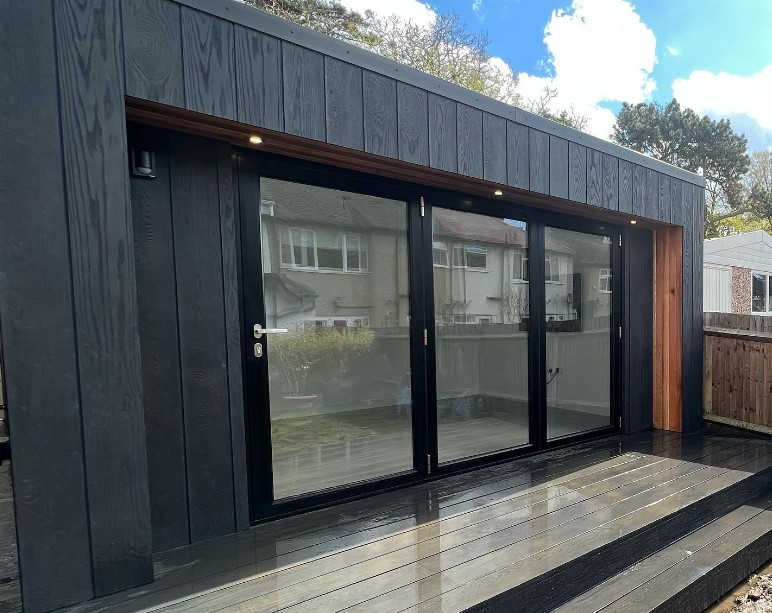
Quality glazing and secure doors (bifold or sliding panels also help with indoor-outdoor appeal)
Sound control, particularly for offices and music studios
Low-maintenance cladding and finishes that still look sharp after a few winters
A layout designed around how the room will actually be used — desk wall space, storage, furniture flow
A clean, tidy installation that looks like it belongs rather than an afterthought
Value killers:
Poor insulation: too hot in summer, freezing in winter — buyers will notice
A temporary or makeshift appearance (exposed cabling, uneven base, cheap cladding)
Damp or ventilation issues — these raise red flags fast during surveys
Over-personalised interiors with no obvious alternative use
Any planning or build compliance uncertainty left unresolved
Planning permission and permitted development
Most garden rooms in England don't require planning permission, provided they meet permitted development criteria set out by the Planning Portal. The key conditions include:
The building must be single storey
Maximum eaves height of 2.5 metres; maximum overall height of 4 metres (dual-pitched roof) or 3 metres (any other roof)
If the room is within 2 metres of a boundary, the overall height must not exceed 2.5 metres
The room must not cover more than half the total garden area
It must not be positioned forward of the principal elevation of the house
There are exceptions. If your property is in a conservation area, an Area of Outstanding Natural Beauty, or is a listed building, different rules apply and planning permission may be needed. In parts of outer London, it's also worth checking whether any Article 4 directions restrict permitted development rights locally.
The honest advice is: don't assume. We flag planning considerations at the concept stage so there are no surprises partway through a build. Get in touch early and we can talk through what applies to your property.
Garden room ideas that tend to appeal to buyers
The use-case matters. Here's how different room types land with buyers:
Garden office: Still the single most appealing option for resale. Hybrid working isn't going anywhere, and buyers value a dedicated, quiet workspace.
Garden gym: Strong appeal for health-conscious buyers; works well as a secondary use if the original owner won't use it as a gym.
Games room / second lounge: Good family appeal — buyers with children or teenagers often see the potential immediately.
Bar / entertaining space: Appeals to the right buyer strongly, but is more niche; design it with some flexibility.
Studio / music room: Excellent for creatives; sound reduction measures help broaden its appeal.
Garden salon: Works brilliantly as a home business space or can easily read as a professional-grade studio.
Wellness room — steam, sauna, jacuzzi: A premium addition in the right property; moisture-aware finishes and proper ventilation are non-negotiable here.
A room that works for multiple uses tends to appeal to the widest range of buyers. A "gym today, office tomorrow" layout is almost always a safer bet than something that only works one way.
How we approach value-led garden rooms at Outer Room
At OuterRoom, we design, manufacture and install luxury, insulated garden rooms across Surrey and outer London — from Guildford and Woking to Epsom, Reigate, Farnham, and the Surrey Hills villages.
Our approach is straightforward: we start with how you'll actually use the space, then make sure the structure, insulation, electrics, and finishes all support that. We build for year-round use, with materials chosen for weather resistance and low maintenance — because a room that still looks smart and performs well three winters in is a very different proposition to one that doesn't.
Our process runs from concept and planning through design and specification, to build and completion. We flag planning considerations early, keep communication clear throughout, and aim for a finish that feels like a natural part of your home — not a box bolted onto the end of the garden.
If you'd like a realistic, no-pressure chat about what a garden room could look like in your space and what's genuinely worth spending money on, we're happy to talk it through.
Frequently asked questions
Do garden rooms add value in the UK?
Yes, in most cases. A professionally designed and built garden room adds usable floor space, which is one of the key drivers of property value. The uplift is most reliable when the room is well-specified, genuinely usable year-round, and appeals to a broad range of buyers.
How much value do garden rooms add to a house?
UK property experts estimate a range of 5–15%, depending on location, build quality, and functionality. On a £300,000 home, that could mean £15,000–£45,000 of added value. That said, no figure is guaranteed — speak to a local estate agent for a more accurate picture of your area.
Are garden rooms a good investment compared with an extension?
Often yes. Garden rooms are typically faster to build, more cost-effective, and far less disruptive than extensions or loft conversions. They also usually fall under permitted development, removing the need for a planning application. For comparable usable space, the return on investment can be very strong.
Do I need planning permission for garden offices?
Most garden rooms in England fall under permitted development and don't require planning permission, provided they meet specific conditions around size, height, placement, and coverage. Exceptions apply to listed buildings, conservation areas, and AONBs. It's always worth checking your specific circumstances before you build.
Can a garden room be fully insulated so it can be used all year-round?
Yes — if it's built properly. Year-round usability comes down to insulation, heating, and ventilation. A well-specified room with quality materials will be comfortable in winter and cool enough in summer. A poorly insulated one won't, and buyers will know the difference.
What's the best use for resale value: office, gym, or bar?
A garden office tends to have the broadest buyer appeal, particularly in areas with high numbers of hybrid workers. A gym is a close second. A bar is more niche but can be a strong differentiator for the right buyer. For maximum resale flexibility, design the room so it could serve more than one purpose.
How long does it take to design and install a garden room?
Timescales vary based on the complexity of the build and the design specification. Smaller, simpler rooms can be completed relatively quickly; larger bespoke projects naturally take longer. We provide a realistic timeline once a project is scoped, so you know exactly what to expect.
What affects the cost of a bespoke garden room?
Key factors include size, insulation spec, glazing type, internal finishes, electrics, and any specialist requirements (sound control, moisture resistance for wellness rooms, etc). A simple, well-insulated garden office will sit at a different price point to a large, fully fitted studio or wellness space. We're transparent about costs from the outset.
Ready to explore a garden room that's built to last?
Garden rooms can add real, measurable value to your home — but only when they're designed and built as proper, liveable space. The spec matters. The finish matters. And getting the fundamentals right from the start is far easier than trying to fix problems later.
If you're exploring a garden room in Surrey or outer London, we'd love to help. We'll talk through your ideas, flag any planning considerations early, and help you shape a room that works for how you live — and holds its value long after the build is done.