

How to Heat a Garden Room in Winter: Insulation Tips
The best way to heat a garden room in winter is to fix heat loss first—insulate the walls, floor and roof, seal gaps around doors and windows—then choose a heater that suits the room's size and use. Electric radiators work well for most rooms, infrared panels suit occasional use, and air-to-air heat pumps offer the lowest running costs for year-round spaces.
There's a particular kind of heartbreak that comes with building a lovely garden room, only to find it's about as warm as a fridge come November. The good news? Most cold garden rooms aren't a heating problem at all—they're an insulation problem wearing a heating problem's coat.
We've spent years designing and installing insulated garden rooms across Surrey and outer London, and we're forever reminding customers that the heater is the easy part. Get the fabric of the building right first, and almost any heating option will feel the benefit. Get it wrong, and even the fanciest heat pump will struggle to keep up.
This guide walks through both halves of the equation: where garden rooms lose heat, how to stop it, and which heating options actually make sense once the room's doing its job properly.
Why insulation matters more than your choice of heater
Think of a poorly insulated garden room as a bucket with holes in it. It doesn't matter how much water (heat) you pour in—it's leaking out faster than you can top it up. A well-insulated garden room uses up to 50% less energy than an uninsulated one, according to industry estimates, which means lower bills and a space that actually stays warm between heating cycles rather than cooling the second the heater clicks off.
The usual culprits for heat loss are:
The roof, especially on flat-roofed buildings without sufficient insulation layers
The floor, which sits directly above cold ground
Glazing, particularly single-glazed windows and doors
Gaps and draughts around door frames, window seals, and cable entry points
If you're asking how to heat a garden room in winter without spending a fortune, the honest answer is: spend on insulation before you spend on kilowatts.
What does a properly insulated garden room actually need?
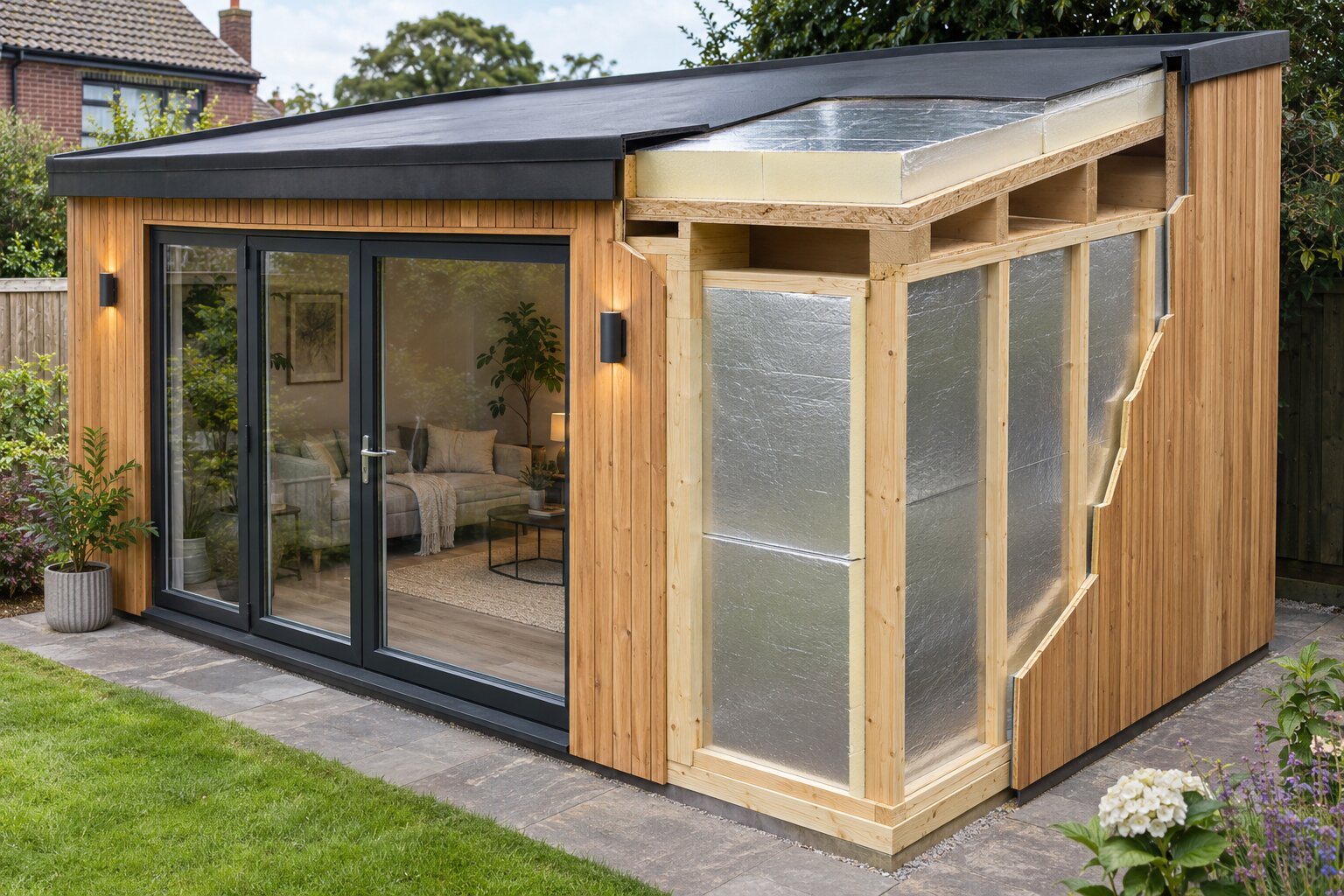
There's a big difference between a basic summerhouse with a thin layer of foam board and a garden room built for year-round use. For a room that genuinely performs in January, you're looking at:
Insulated walls and roof, typically using PIR boards or mineral wool, built into the structure rather than bolted on as an afterthought
An insulated floor, raised and sealed against the cold ground beneath
Double or triple glazing, which cuts heat loss through windows and doors significantly
A vapour control layer, which helps manage moisture inside the walls and reduces the risk of damp building up over time
This is exactly the standard we design to at OuterRoom. We build garden rooms specified for year-round use, not just a sunny Saturday in June, which means the insulation, glazing, and heating all get planned together rather than treated as separate decisions.
Quick wins to keep a garden room warm in winter
Before you touch the heating, there are a few inexpensive fixes worth doing first:
Draught-proof doors and windows with simple foam or brush seals around the frames
Hang thermal curtains or blinds over glazed areas to add another layer against the cold
Add rugs or floor coverings, which help retain warmth and make the room feel cosier underfoot
Use a smart thermostat or timer so the room warms up before you need it and switches off when you don't
Only heat the zones you use, rather than trying to warm the whole room to the same temperature all day
None of this replaces proper insulation, but it'll make a noticeable difference while you're deciding on a longer-term heating setup.
Garden room heating options: which one suits you?
Once the room's holding onto heat properly, you've got several solid options for actually generating it. Each one suits a slightly different use case, so the "best" choice really depends on how you use the space.
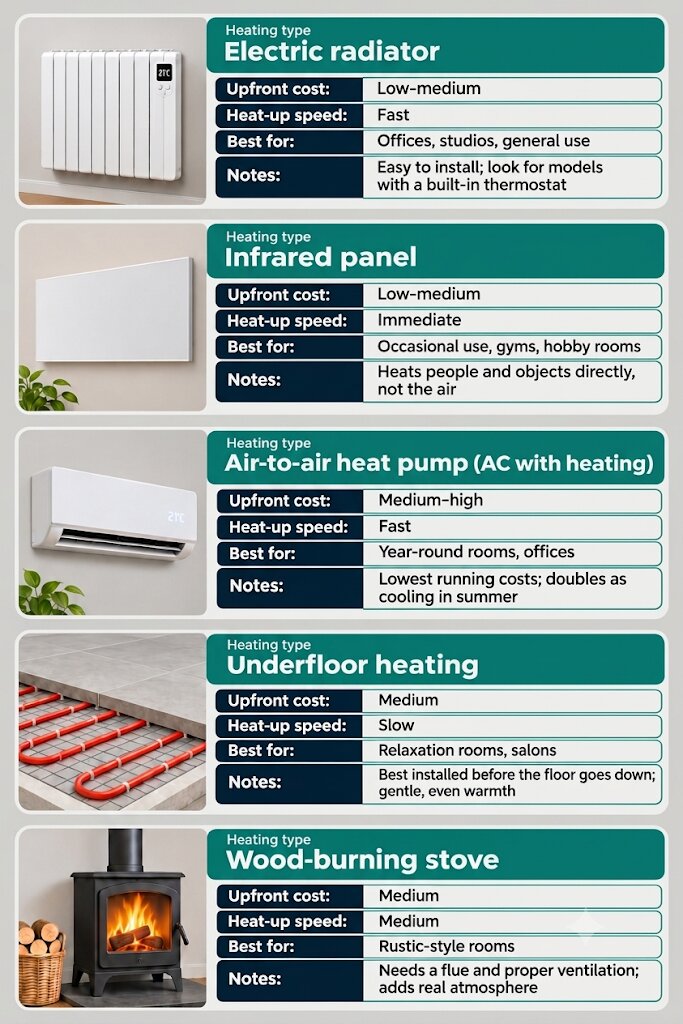
Electric radiators remain the most popular choice for UK garden rooms, mainly because they're simple to install and don't need specialist fitting. Infrared panels are brilliant if you're in and out of the room rather than sitting in it all day, since they warm you directly rather than heating the air around you. If you're using the room every single day, year-round, an air-to-air heat pump tends to pay for itself over time through lower running costs—plus you get air conditioning as a bonus in summer.
How to work out what size heater you actually need
This is where a lot of guesswork happens, and it's easy to end up with something either underpowered or wildly oversized. As a rough starting point, many well-insulated garden rooms need somewhere in the region of 60–80 watts per square metre, though this varies depending on ceiling height, glazing, and how exposed the room is. A 15m² garden office, for example, might need roughly 900W–1,200W to maintain a comfortable temperature on a cold day.
That's a general guide, not a guarantee—it's always worth getting a proper calculation from whoever's installing your heating, especially if electrical work is involved.
Ventilation and condensation: the part people forget
Here's the twist nobody warns you about: a well-sealed, well-heated garden room can still develop condensation. Breathing, drying gym kit, or even boiling a kettle adds moisture to the air, and if that moisture has nowhere to go, it ends up on your windows—or worse, inside your walls.
The fix isn't to under-insulate the room; it's to ventilate it properly. Trickle vents, brief bursts of "purge" ventilation (opening a window for a few minutes), and keeping a steady background temperature rather than letting the room swing between freezing and tropical all go a long way. We factor ventilation into every design at OuterRoom, precisely because insulation and airflow need to work together, not against each other.
How we approach this at OuterRoom
Every garden room we build in Surrey and outer London is designed with winter in mind from day one. During the design and specification stage, we talk through heating, insulation, and glazing together, so the finished room is warm, quiet, and genuinely usable in December as well as June. We'd rather steer you towards something that holds up for years than something that looks great on day one and lets you down the first time the temperature drops.
Frequently asked questions
What's the cheapest way to heat a garden room in winter?
Insulating the room properly first is the cheapest long-term fix, since it reduces how much heating you need overall. For the heater itself, electric radiators with a thermostat tend to offer the best balance of low upfront cost and reasonable running costs for everyday use.
Are electric radiators good for heating a garden room?
Yes. Electric radiators are easy to install, provide consistent heat, and many include programmable thermostats, making them a reliable choice for offices, studios, and general-use garden rooms.
Can I use a fan heater in a garden room?
Fan heaters can work for quick, occasional bursts of heat, but they're not ideal for daily use since they heat the air rather than the room's structure, so the warmth disappears quickly once switched off.
Is underfloor heating worth it in a garden room?
It's a great option if you want even, gentle warmth, particularly in relaxation spaces or salons. It needs to be installed before the floor goes down, so it's best planned at the design stage rather than added later.
How do I stop my garden room getting damp in winter?
Keep a steady background heat rather than switching it on and off dramatically, and make sure there's some form of ventilation—trickle vents or short bursts of fresh air—to let moisture escape.
Can an insulated garden room be used all year round?
Yes, provided it's built properly. That means decent insulation in the walls, roof and floor, suitable glazing, and a heating system matched to the room's size and use.
Ready to stop dreading your garden room in winter?
Insulation first, the right heater second, and a bit of sensible ventilation to tie it all together—that's really all there is to it. If you're planning a new garden room, or wondering whether your existing one can be brought up to winter standard, we're happy to talk it through.
Get in touch with OuterRoom via phone,email or head to our contact page to arrange a chat about your space.